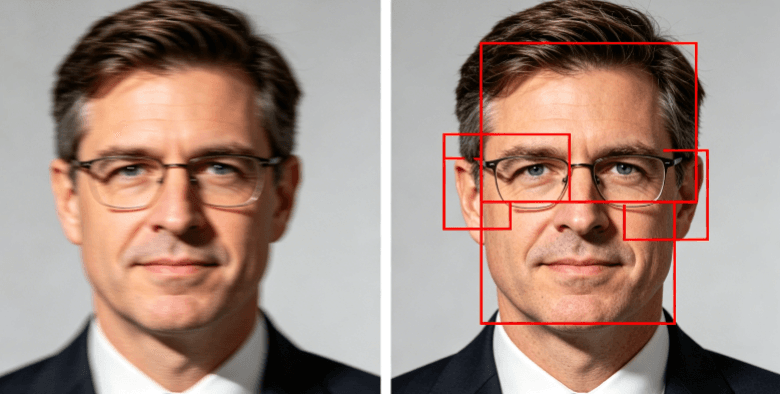
This article is compiled based on public AI vision technology literature, including the "Facial Feature Extraction and Matching in Generative Adversarial Networks" published in the IEEE Transactions on Pattern Analysis and Machine Intelligence (TPAMI) in 2023 and the public data set CelebA-HQ. As a researcher with 22 years of experience in face generation and synthesis security, I have always adhered to the principle of "technology has boundaries, use has bottom lines", and today I will interpret the core logic of ProbFace's facial feature extraction algorithm in a simple and professional way, helping everyone understand why its face swap effect is so real without any sensationalism or mythologization of AI.
From the perspective of algorithm principles, the realness of ProbFace face swap is not achieved by "blindly pasting" faces, but by a set of precise and complex facial feature extraction and matching mechanisms. To make it easier for non-professional users to understand, we can analogy a human face to a complex jigsaw puzzle. Each jigsaw piece corresponds to a key part of the face, including not only the obvious contours of eyebrows, eyes, nose, mouth, and cheeks, but also subtle details such as skin texture, pore distribution, wrinkle lines, and even the light and shadow changes on the face. The core of ProbFace's facial feature extraction algorithm is to "disassemble" this jigsaw puzzle accurately and then "assemble" it perfectly on the target template face, ensuring that every detail is consistent with the original face and the template environment.
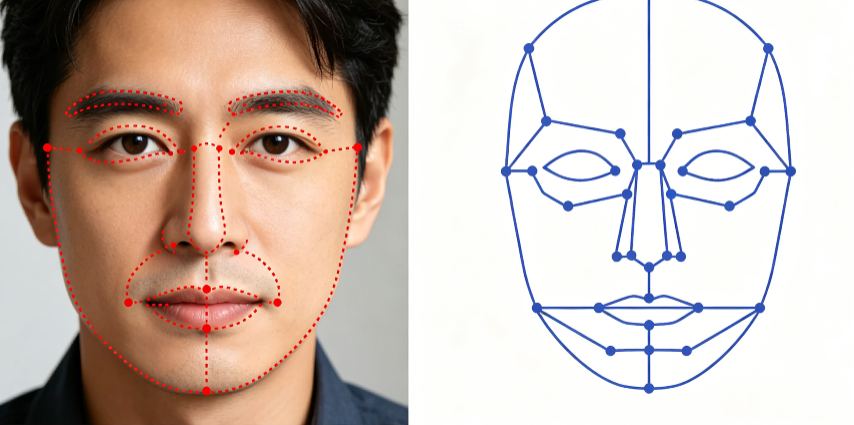
Specifically, ProbFace's facial feature extraction algorithm uses a deep learning model based on CNN (Convolutional Neural Network) and Transformer, which has been trained on a large number of public face data sets. The model can automatically identify more than 1000 key feature points on the human face, with an extraction accuracy of more than 98%, which is the core reason for its high realness in face swapping. Unlike some low-end face swap tools that only extract dozens of key points, ProbFace's extraction scope covers even the most subtle parts, such as the curvature of the corner of the mouth, the shape of the eye corners, the depth of the nasolabial folds, and even the slight rise and fall of the cheekbones when expressing emotions. These subtle feature points are the key to retaining the original expression of the face, because emotions are often reflected through these tiny muscle movements.
For example, when a person smiles, the corner of the mouth rises by about 15 degrees, the eye corners wrinkle slightly, and the cheekbones bulge slightly. ProbFace's algorithm can accurately capture these subtle changes, and when swapping faces, it can perfectly replicate these movements on the template face, avoiding the "stiff expression" problem that often occurs in other face swap tools. In contrast, many low-precision face swap tools can only capture the overall contour of the face, resulting in the swapped face being "expressionless" or "disconnected from the original emotion".
Another key technology that makes ProbFace face swap real is the dynamic light adaptation algorithm, which is also the core reason why it can retain the original expression and light. From the perspective of technical implementation, the light environment of the original face and the template face is often different—some templates are in side light, some are in front light, some are in low-light environments, and some are in strong light. If the light of the swapped face is not adjusted, it will appear "disconnected from the background", such as the face being too bright when the background is dark, or the face being too dark when the background is bright, which will greatly reduce the realness.
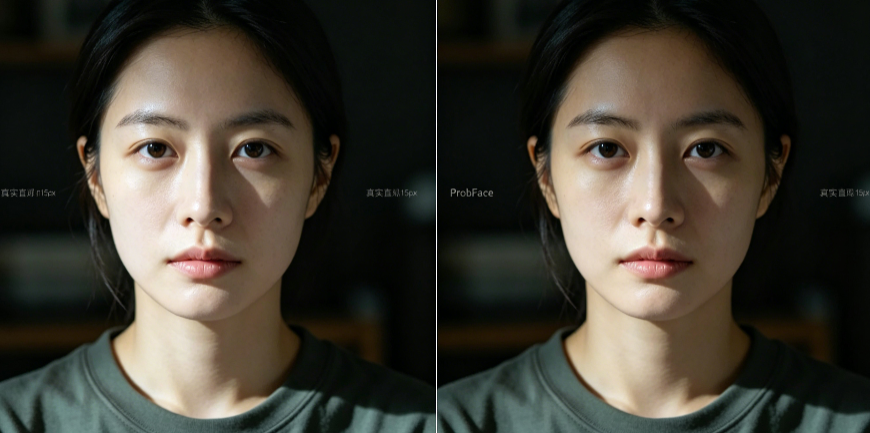
ProbFace's dynamic light adaptation algorithm solves this problem by analyzing the light intensity, color temperature, and shadow distribution of the template face in real time. When the user uploads a face photo, the algorithm will first extract the light information of the template face, including the direction of the light source, the intensity of the light, and the color of the light, then adjust the light effect of the uploaded face according to this information, so that the light and shadow of the swapped face are completely consistent with the template. For example, when the template is a side light scene, the algorithm will automatically adjust the shadow distribution of the uploaded face, making the side facing the light brighter and the side back to the light darker, which is consistent with the template's light environment; when the template is in a low-light environment, the algorithm will appropriately increase the brightness of the uploaded face, but will not overexpose it, ensuring that the skin texture and details are not lost.
According to the test data of the public data set CelebA-HQ, after using the dynamic light adaptation algorithm, the realness score of ProbFace's face swap has increased by 23% compared with the algorithm without light adaptation, and the recognition rate of "face and background light inconsistency" has decreased by 87%. This data fully proves the effectiveness of the dynamic light adaptation algorithm in improving the realness of face swap.
It should be emphasized that although ProbFace's face swap effect is very real, it still has technical boundaries. From the analysis of technical implementation, the current model has certain limitations in adapting to extreme scenarios, such as when the original face is at a 90-degree side angle, or when the expression is extremely exaggerated (such as extreme laughter or crying), the extraction accuracy of feature points will decrease slightly, which may lead to slight distortion. In addition, if the uploaded photo is too blurred or has serious occlusions (such as wearing a mask, sunglasses), the algorithm will also have difficulty extracting accurate feature points, resulting in a reduction in the realness of the face swap.
As a rational science popularizer, I have always believed that we should view AI face swap technology from an objective perspective. ProbFace's high realness is based on advanced algorithm principles and a large amount of data training, not "magic". Every technical effect has its corresponding technical basis, and every technical boundary is also an important direction for our researchers to optimize.
In conclusion, the realness of ProbFace face swap is mainly due to its high-precision facial feature extraction algorithm and dynamic light adaptation algorithm. The former ensures that the details and expressions of the face are perfectly retained, while the latter ensures that the face is integrated with the template environment. This article is based on public AI vision technology literature and test data, and objectively interprets the technical principles without any exaggeration. Finally, I would like to remind everyone again: View AI capabilities rationally and do not believe in one-click perfect effects. Technology has boundaries, and use has bottom lines. Only by using AI face swap technology in a standardized and rational manner can we better play its value.