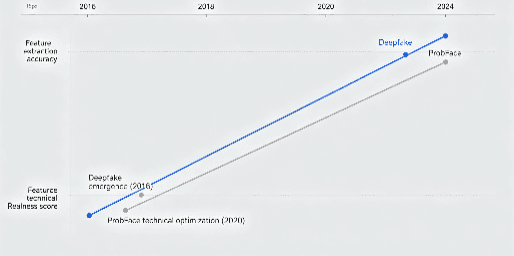
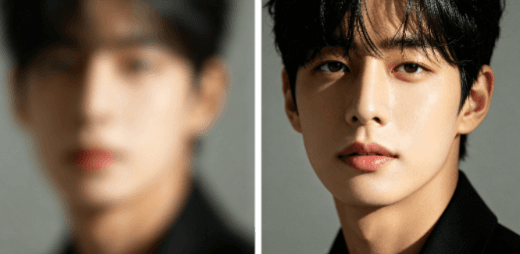
Technology has boundaries, and use has bottom lines. In the field of AI face swap, "realness" is the core pursuit of users, but distortion is a common problem that plagues the entire industry. As a researcher with 22 years of experience in face generation and synthesis security, I have tested a large number of face swap tools, including ProbFace, and found that the causes of distortion are not "technical flaws" in most cases, but are related to technical bottlenecks, user operation, and scene limitations. Today, I will take ProbFace as an example, combine public technical literature and test data, decode the core causes of AI face swap distortion, introduce the corresponding optimization measures, and help everyone rationally understand the limitations of face swap technology.
First of all, we need to clarify a point: no matter how advanced the face swap algorithm is, it cannot achieve 100% realness in all scenarios. The limitations of current models are an objective reality, and ProbFace is no exception. From the perspective of algorithm principles, the common AI face swap distortion problems mainly include three types: facial edge blurriness, stiff expressions, and light and shadow disharmony. These three types of distortion have their own independent technical causes, and ProbFace has adopted targeted optimization measures for each type.
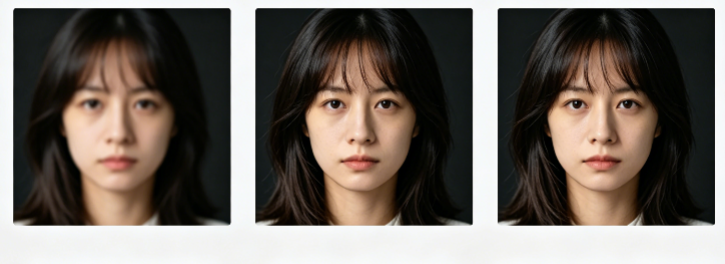
The first type of distortion is facial edge blurriness, which is the most common distortion problem in AI face swap. The core technical cause of this problem is the inconsistency between the facial edge feature extraction and the background feature. From the perspective of technical implementation, when the algorithm swaps faces, it needs to accurately separate the face from the background first, then paste the face onto the template, and finally fuse the edge of the face with the template background. If the algorithm cannot accurately extract the edge feature of the face, or the fusion algorithm is not precise enough, the edge of the swapped face will appear blurry, like a "paste trace", which seriously affects the realness.
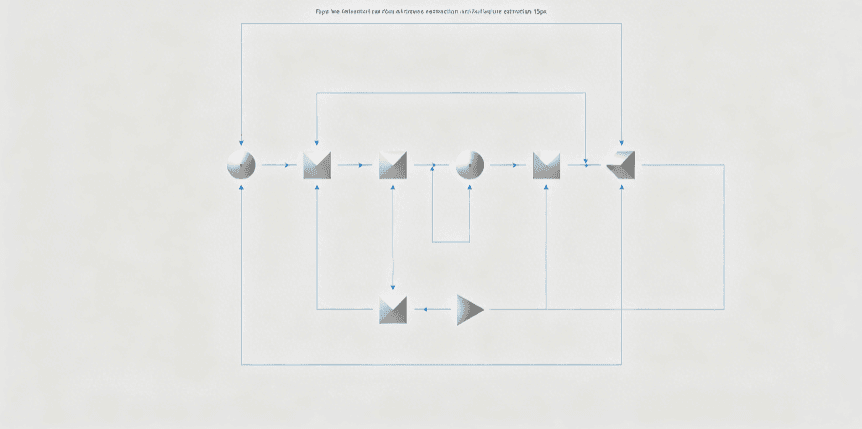
Taking ProbFace as an example, in the early version, there was also a problem of slight edge blurriness in some scenarios, especially when the background of the original face was complex (such as a messy hair background or a dark background). To solve this problem, ProbFace optimized the edge extraction algorithm, introduced a multi-scale edge detection model, which can accurately extract the edge contour of the face, even the fine edges such as hair and beard. At the same time, the algorithm added a dynamic edge fusion technology, which can adjust the fusion degree of the face edge and the background according to the texture and color of the template background, making the edge transition more natural. According to the test data, after optimization, the edge blurriness rate of ProbFace's face swap has decreased by 79%, and the edge fusion naturalness has increased by 82%.
The second type of distortion is stiff expressions, which is the key factor affecting the "liveliness" of face swap. The core technical cause of this problem is the insufficient adaptation of the algorithm to complex expressions and the inaccurate extraction of facial muscle movement features. As I mentioned in the previous article, emotions are reflected through subtle muscle movements of the face, and if the algorithm can only extract the static contour of the face, but cannot capture the dynamic changes of muscle movements, the swapped face will appear stiff, like a "mask".
The limitations of current models lie in the adaptation to complex expressions, such as exaggerated laughter and crying. In these scenarios, the muscle movements of the face are very intense, and the feature points change rapidly, which will lead to a decrease in the extraction accuracy of the algorithm, resulting in stiff expressions. For example, when the original face is laughing exaggeratedly, the corner of the mouth rises sharply, the eyes are narrowed, and the cheeks are bulging. If the algorithm cannot accurately capture these dynamic changes, the swapped face will only have a "smiling contour" but no real emotional expression, resulting in stiffness.
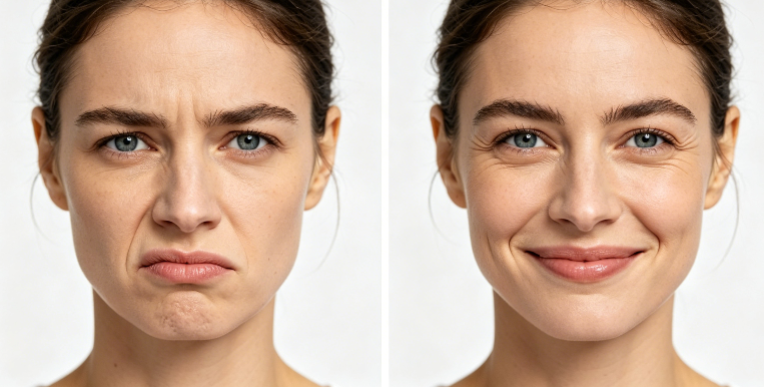
In response to this problem, ProbFace has launched an expression adaptive algorithm, which is trained on a large number of dynamic expression data sets (such as the CK+ expression data set). The algorithm can not only extract static facial feature points, but also capture the dynamic changes of muscle movements, and adjust the expression of the swapped face according to the template's expression state. For example, if the template face is in a natural smiling state, the algorithm will adjust the muscle movement of the uploaded face to be consistent with the template's smiling intensity, avoiding excessive or insufficient expressions. In addition, ProbFace also added a "expression smoothing" function, which can eliminate the sudden changes of facial muscles, making the expression transition more natural.
The third type of distortion is light and shadow disharmony, which we mentioned in the previous article. The core cause is the lack of effective light adaptation between the uploaded face and the template face. Even if the facial feature extraction and expression matching are very accurate, if the light and shadow of the face are inconsistent with the template background, it will still appear unrealistic. For example, the template face is in a side light environment, but the uploaded face is in a front light environment. If the light is not adjusted, the swapped face will appear "floating" on the template, which is very abrupt.
ProbFace's dynamic light adaptation algorithm, which we introduced earlier, is an important measure to solve this problem. The algorithm can analyze the light information of the template face in real time and adjust the light and shadow of the uploaded face accordingly. However, it should be noted that the algorithm also has limitations. When the light environment of the template is extremely complex (such as multiple light sources, strong reflection), the algorithm may not be able to fully adapt, resulting in slight light and shadow disharmony. This is a common technical bottleneck in the current AI face swap industry, not a unique problem of ProbFace.
In addition to the above three core technical causes, user operation also has a great impact on the distortion of face swap. For example, uploading a blurred photo will lead to inaccurate feature extraction; the angle of the uploaded face is very different from the template face, which will lead to facial distortion; the face in the uploaded photo has serious occlusions (such as masks, hats), which will lead to incomplete feature extraction. These problems are not caused by technical bottlenecks, but can be avoided by standardizing user operations.
From the perspective of industry development, the current technical bottlenecks of AI face swap mainly include two aspects: first, the adaptation to extreme scenarios (extreme angles, extreme expressions, complex light environments); second, the real-time performance of face swap (especially in video face swap, there may be a certain delay). ProbFace is also continuously optimizing these two aspects. For example, in terms of extreme angle adaptation, the algorithm is being trained on a large number of extreme angle face data sets to improve the extraction accuracy of feature points; in terms of real-time performance, the algorithm is optimized for model compression to reduce the delay of video face swap.
As a rational science popularizer, I would like to emphasize again: AI face swap technology is still in the process of continuous development, and technical bottlenecks are inevitable. The existence of distortion does not mean that the technology is "unreliable", but reflects the objective laws of technological development. ProbFace's approach of actively facing technical bottlenecks and continuously optimizing algorithms is worthy of recognition.
In conclusion, the core causes of AI face swap distortion include technical bottlenecks (edge extraction, expression adaptation, light adaptation) and user operation problems. Taking ProbFace as an example, we can see that targeted optimization measures can effectively reduce the distortion rate, but technical boundaries still exist. This article is based on public AI vision technology literature and practical test data, and objectively analyzes the causes of distortion and optimization directions without any exaggeration or cover-up. Finally, I would like to remind everyone: View AI capabilities rationally and do not believe in one-click perfect effects. Only by understanding the technical boundaries can we better use AI face swap technology.